While delivering safe, high-quality, patient-centered care remains the top priority for healthcare providers, consumers demand great “customer service” and strong communication throughout the experience.
In fact, respondents cite the demeanor of front office staff as being more important than bedside manner in earning their loyalty and impacting their likelihood to recommend.
59% of patients consider good pre- and post-appointment communication as key to their loyalty—a 27.9% uptick since 2019.
~~~~~
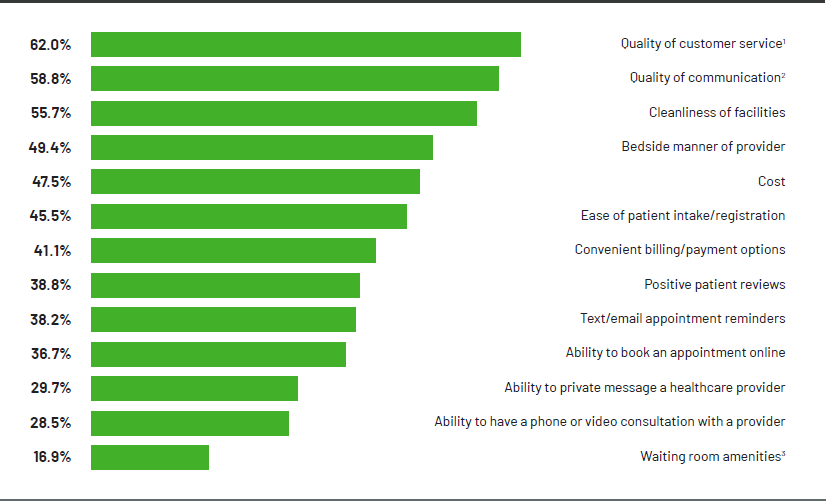
More than a third also value text and email appointment reminders.
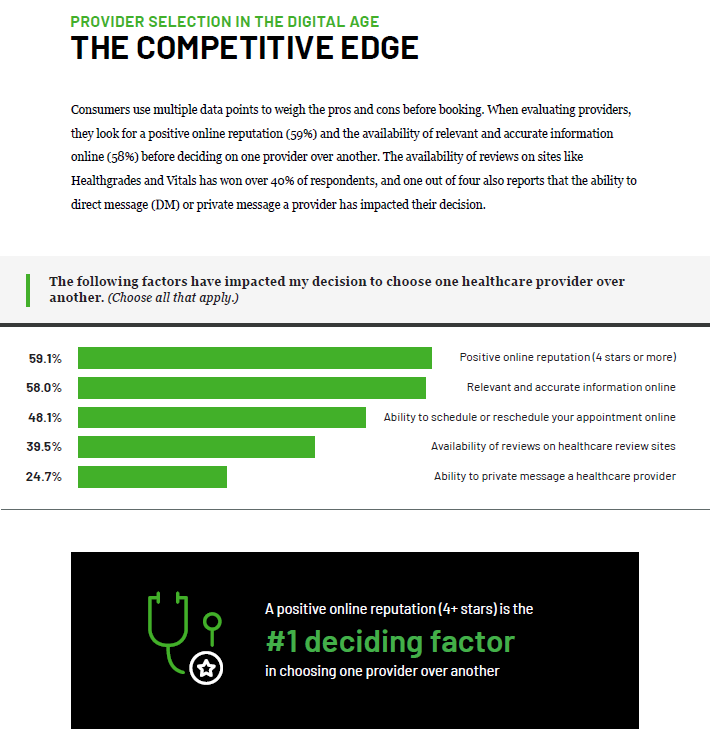
When asked, what other factors influence your loyalty to a provider (i.e., you would recommend them to a friend or seek care from them multiple times):
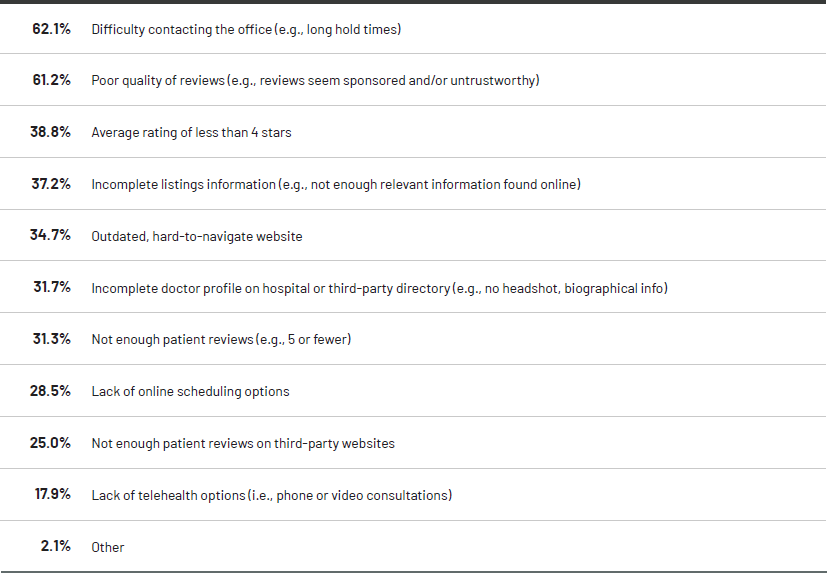
Many factors may prevent a consumer from becoming a patient.
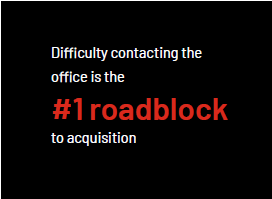
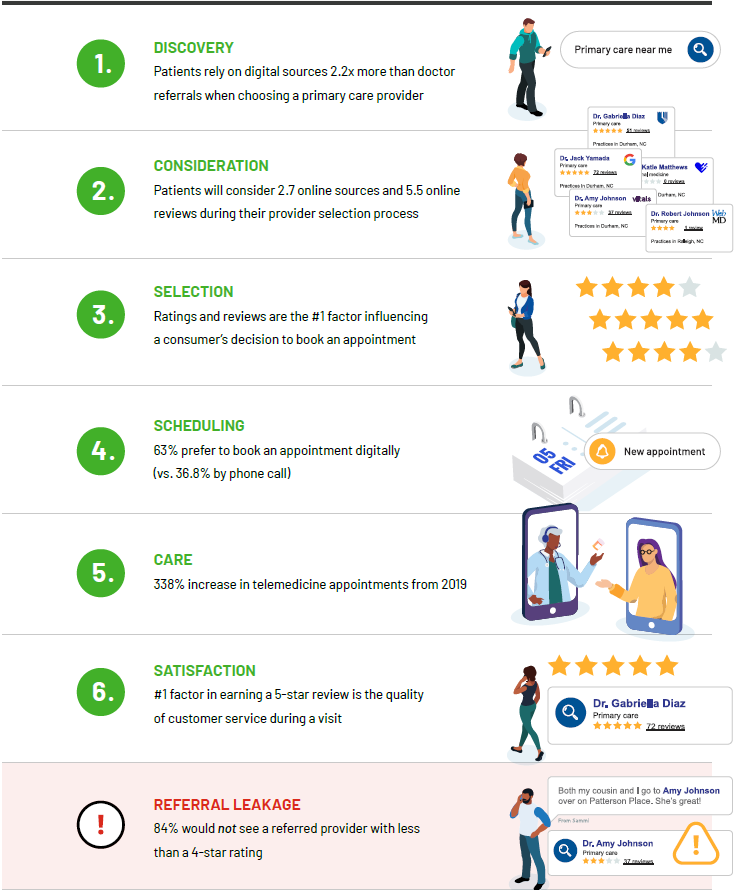
“Difficulty contacting the office” is the #1 reason a patient is deterred from booking an appointment.
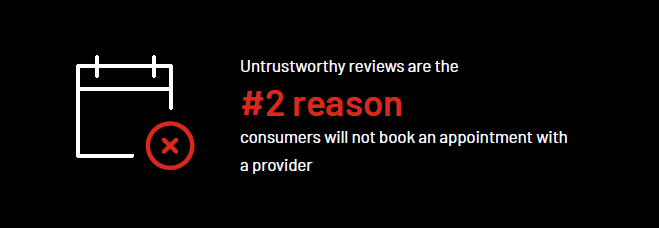
The second-biggest blocker of successful acquisition is untrustworthy reviews, followed by an average rating of less than 4 stars and incomplete listings information.
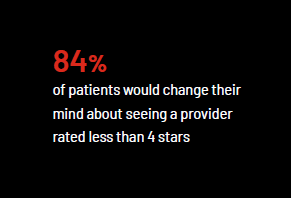
Referrals are still a critical part of the patient journey—but no longer enough to secure a patient. After receiving a referral, 83% of patients today will go online to read reviews about the referred provider. And 84% say they will change their mind about a referred provider if they are rated less than 4 stars.
Medical practices increasingly face administrative burdens and staffing challenges that make truly patient-centered care difficult — if not impossible. But maintaining good patient relations pays dividends through higher patient satisfaction scores, increased loyalty and higher revenues during a time when margins are thin.
Secure, HIPAA-complaint asynchronous and synchronous communications can help the same number of staff to manage more patients, preserve provider time for the sickest patients and create workflow efficiencies.
Patients shouldn’t need to take additional steps to communicate with the practice, such as download an app or remember log-in credentials for the patient portal. Mobile devices are convenient, handy and the preferred communications method for an increasingly tech-savvy population.
A communications platform that includes secure photo and video capabilities reduces significant barriers between patient needs and provider time.
Telehealth visits comprised a tiny portion of total medical visits prior to the pandemic. After skyrocketing by a factor of 78 during the early months of 2020, telehealth usage remains 38 times higher than the pre-COVID-19 baseline. Going forward, patients expect synchronous video to continue as a viable provider/patient communication avenue.
Asynchronous communication through text or photographs can increase patient touchpoints and satisfaction while making the practice more efficient. A dermatologist can look at a patient-submitted photo and determine whether a skin condition is harmless or warrants an in-person visit. A surgeon can look at a photo of an incision and determine whether it is healing properly.
Asynchronous communications can also help patients manage their chronic conditions. When integrated with the practice management system, personalized and templated messages can be sent to certain patient cohorts at pre-determined times. A cardiologist, for example, can request blood pressure readings for at-risk patients, or a general practitioner can request blood glucose numbers for diabetes patients. If the numbers look good, the provider can send a positive note that encourages future compliance, while negative numbers may require an appointment.




Recent Comments