Having Trouble Locating BCBS 1st Qtr HCPCs?
POET has heard from Genesis our BCBS Network Management Consultant. 2024 HCPCs schedules are still in effect. The 1st quarter update will be effective March 1, 2025.
HS Connect Issues
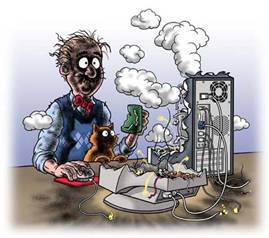
You may have been experiencing issues with HS Connect. One office reported to POET (thank you) they had been in contact with HS Connect. And was told that on January 1, 2025 HS Connect had a major update. You may already guessed, it failed (Majorly in Texas). Our source was told that HS Connect is having to enter Texas Data by hand. What you are seeing when you pull up the screen is 2024 data.
For more information call: HS Connect Help Desk (866) 952-7596 , option 2 or email [email protected]
Aetna Cuts Payment for NPP-Care
By Alisa Pierce ~ TMA
UPDATE: Please see update to this article, posted 2/13/25
Starting April 1, Aetna will pay physician practices only 85% of the Medicare Physician Fee Schedule’s allowed amounts for services provided by non-physician practitioners (NPPs)
This will be regardless of whether you bill Medicare directly or “incident-to” physician supervision.
- Both direct and incident-to claims will still be required to include modifiers SA or SB to indicate what type of NPP rendered the service, such as a nurse practitioner or certified nurse midwife.
- NPPs will still be required to be employed by supervising physicians and registered with the Texas Medical Board as having delegated prescriptive authority.
“This is essentially [Aetna] getting rid of incident-to billing,”
What are the Security Requirements for HIPAA Compliant Emails?
Security Rule (§164.306)
(a) ENCRYPTION: Securing email containing PHI from end to end. You may visit “The National Institute of Standards and Technology” for advice on the latest and most suitable standards for email services.
(b) Email Phishing Protection: Technology can include email filters and spam protection systems that help detect and block phishing emails before they reach the user’s inbox. Anti-phishing software solutions can detect and block phishing attempts by analyzing web traffic and identifying malicious websites designed to steal user credentials.
(c) Spam Protection: Email spam protection is a system designed to detect and block unwanted or potentially harmful email messages from reaching a user’s inbox.
(d) Virus Protection: Installed on email servers and user devices, virus protection solutions scan emails, including attachments and links in emails for viruses. The software is automatically updated with the latest virus definitions to protect against new threats and provide continuous monitoring and real-time protection of email traffic.
(e) Ransomware Protection: Ransomware security protection involves a range of measures and tools designed to prevent, detect, and respond to ransomware attacks. In addition to antivirus software, phishing detection, spam filters, and email filtering discussed above, ransomware includes endpoint protection which monitors and secures individual devices against ransomware attacks along with the entire network of devices.
ALERT: BCBS Not All PPO in the Suitcase Cards Follow the Rule
SAY IT ISN’T SO!
Things to look for: But remember cards are so tricky these days, what applies to one, may not apply for another:
Is the “Texas Department of Insurance” acronym TDI on the card? If a health insurance card does not have “TDI” on it, it is likely an ERISA plan, meaning it is a self-funded plan regulated by federal law and not by the Texas Department of Insurance (TDI) because the employer directly pays claims instead of relying on an insurance company; the absence of “TDI” indicates the plan is self-funded and therefore likely falls under ERISA regulations. (resource tdi.texas.gov)
Look for these phrases, usually on the back of the card:
“BCBS provides administrative services only and assumes no financial risk for claims.”
“JBS will utilize Anthem to handle member contract for Health plan administration”
“Anthem Blue Cross and Blue Shield provide administrative claims payment services only and does not assume any financial risk or obligation with respect to claims”
“BCBST provides administrative services only and assumes no financial risk for claims.”
2/11/25 Amended to add Cigna. Look for these terms on Cigna Commercial cards:
- Shared Administration (S)
- Benefits are not insured by Cigna or Affiliates
Scrutinize each member’s card on an individual patient basis. No rule is across the board.
Modifier 25 Fact Sheet from Novitas
Modifier 25 Fact Sheet
Modifier 25 is defined as a significant, separately identifiable evaluation and management (E/M) service by the same physician or other qualified health care professional on the same day of a procedure or other service.
Physicians of the same specialty in the same group practice are considered the same physician; therefore, they must bill and be paid as though they were a single physician.
Appropriate Use
Use modifier 25 with the appropriate level of E/M service.
- Modifier 25 indicates on the day of a procedure, the patient’s condition required a significant, separately identifiable E/M service, above and beyond the usual pre- and post-operative care associated with the procedure or service performed.
- E/M service may occur on the same day as a procedure. Medicare allows payment when the documentation supports modifier 25.
- A minor surgical procedure performed has a global period of 0-day or 10-day listed on the Medicare physician fee schedule (JH) (JL) and meets the definition of modifier 25.
Global Surgery
Global surgery is defined as all necessary services normally furnished by a surgeon before, during, and after a procedure. Medicare payment for a surgical procedure includes pre-operative, intra-operative, and post-operative services routinely performed by the surgeon or by members of the same group with the same specialty.
Do not use modifier 25 when billing for services performed during a post-operative period if related to the previous surgery. Related follow-up examinations by the same provider during the global period of a previous procedure are included in that procedure’s global surgical package.
- For an unrelated E/M service during the global period of a previous procedure, you may be able to report an appropriate E/M code with modifier 24 (unrelated evaluation and management service by the same physician during a postoperative period) appended.
- The E/M is for a new problem not related to the patient’s previous complaint or procedure.
- Append modifier 57 (decision for surgery), rather than modifier 25, if the E/M service prompts the decision to render a major procedure within 24 hours of the E/M service. Major procedure is defined as one with a 90-day global period.
National Correct Coding Initiative (NCCI) Procedure-to-procedure (PTP) edits
The NCCI promotes national correct coding methodologies and controls improper coding leading to inappropriate payment. The PTP code pair edits are automated prepayment edits preventing improper payment when reporting certain codes together for Part B-covered services on the same day by the same physician.
When both correct coding and global surgery edits apply to the same claim by the same physician, we’ll first apply the correct coding edits. Then, we’ll apply the global surgery edits to the correctly coded services
References:
E/M visit complexity add-on HCPS code G2211,
Effective for dates of service on and after January 1, 2025:
HCPCS code G2211 is payable when an associated office and outpatient (O/O) E/M base code (CPT codes 99202-99205 or 99211-99215) is reported with modifier 25 for the same patient by the same provider and a Part B preventive service, immunization administration, or annual wellness visit service identified in attachment 1 in Change Request (CR) 13705 is also present for the same date of service.
For claims not containing one of the identified services above or dates or service prior to January 1, 2025:
- Claims will deny when HCPCS code G2211 and an associated office and outpatient (O/O) E/M visit (CPT codes 99202-99205 or 99211-99215) is reported with modifier 25 for the same patient by the same provider on the same date of service:
- Separately identifiable visits occurring on the same day as minor procedures (such as 0 or 10-day global procedures) have resources sufficiently distinct from costs associated with furnishing stand-alone O/O E/M visits to justify different payment.
References:
- Change Request 13705 – Allow Payment for Healthcare Common Procedure Coding System (HCPCS) Code G2211 when Certain Part B Preventive Services are Provided on the Same Day
- MLN Matters article MM13473 – How to Use the Office & Outpatient Evaluation and Management Visit Complexity Add-on-Code G2211
- MLN Matters article MM13272 – Edits to Prevent Payment of G2211 with Office/Outpatient Evaluation and Management Visit and Modifier 25c
Inappropriate use
Avoid denials of claims with an appropriate use of modifier 25
- Do not report HCPCS code G2211 when modifier 25 is reported on an associated E/M visit (CPT codes 99202-99205 and 99211-99215) for claims not containing a Part B preventive service, immunization administration, or annual wellness visit service or dates of service prior to January 1, 2025.
- Do not use modifier 25 on HCPCS code G2211.
- Do not use modifier 25 on CPT code 99211
- Do not use modifier 25 by a physician other than the physician performing the procedure or physician of the same specialty in the same group practice.
- Do not use modifier 25 when documentation does not support a significant, separately identifiable E/M service.
References:
- CMS IOM Pub. 100-04 Medicare Claims Processing Manual, Chapter 12, section 40.2-40.5
- CMS IOM Pub. 100-04 Medicare Claims Processing Manual, Chapter 23, section 30.2
- E/M Service-specific coding instructions
- Frequently Asked Questions: Evaluation and management services
- Global Surgery Fact Sheet
- Global surgery & related services
- Global surgery calculator (JH) (JL)
- Local contractor pricing references
- MLN Matters article MM13452 – Medicare Physician Fee Schedule Final Rule Summary: CY 2024
- Modifier 25 tip sheet
Tips for Great Customer Service
- Make sure each of your employees can make a good 1st impression.
- Keep your promises.
- Show appreciation and gratitude to your patients.
- Provide solid training.
- Listen and act when your patients complain.
- Go above and beyond what patients expect.
- Make it easy on your patients.
- Be open with mistakes.
- Be a little obsessed with your patients.
- Treat your employees (and each other) like customers.
Update: TMB Continues to Clarify Fingerprinting Requirement
By Patrick McDaid 3/11/2024
New Fingerprinting Requirement has Sparked Confusion and Concern Among Texas Physicians
The Texas Medical Association is working closely with the Texas Medical Board (TMB) to help ensure physician licenses are renewed on time as the agency takes steps to clarify the process.
“Fingerprint results will not be required until your renewal. Reminders of the fingerprint requirement will be included in the renewal notice sent out 90 days prior to your current expiration date. Detailed instructions will be included in the email renewal reminder notices,” TMB said about those who are renewing during their designated renewal period.
TMB encourages licensees to begin the fingerprinting process early. While it can be done before the 60- to 90-day window of license renewal, physicians must contact TMB to submit them to the agency earlier than that window.
For those who wish to submit their fingerprints early, “Please contact [email protected] and request instructions for your fingerprint submission. You can complete the fingerprint requirment at any point prior to your license expiration date,” TMB said via its website.
Staff Salary Survey Results January 2, 2024
Check out “Physicians Practice’s” Staff Salary Survey. Use the link below.
You May Be Entitled to a Settlement from BCBS
The class action lawsuit, In re: Blue Cross Blue Shield Antitrust Litigation, addresses Provider Plaintiffs’ claim that the Settling Defendants violated antitrust laws by illegally dividing the United States into “Service Areas” and agreeing not to compete in those areas. Provider Plaintiffs also claim that the Settling Defendants fixed prices for services provided. The class action is pending in the United States District Court for the Northern District of Alabama, Southern Division. U.S. District Judge R. David Proctor is overseeing it. Both sides want to avoid the risk and cost of further litigation and have agreed to the Settlement. The Provider Plaintiffs and their attorneys think the Settlement is best for the Settlement Class.
This Settlement Class includes all Providers in the U.S. (except Excluded Providers FAQ 5, who are not part of the Settlement Class) who currently provide or provided healthcare services, equipment or supplies to any patient who was insured by, or was a Member of or a beneficiary of, any plan administered by any Settling Individual Blue Plan from July 24, 2008 to October 4, 2024 (“Settlement Class Period”). Class Members who submit a valid approved claim (“Authorized Claimants”) will receive a payment from the Net Settlement Fund if the Settlement is approved
To visit the official platform Portal for Settlement Class Members to submit claims for a share of the Net Settlement Fund and to get up-to-date information about the Settlement Program. Follow the link below.
Recent Comments