More on DEA Training

Please click on this link “DEA Registered-Practioners” to read the Letter from the Drug Enforcement Administration (DEA). 

Pay close attention to “Group 2”. There are other ways to satisfy the training requirement. 

Additional Links:

New Requirement – DEA Registered Practioners

HEADS UP!

All practitioners registered with the Drug Enforcement Agency (DEA) will be responsible for fulfilling a one-time, eight-hour training requirement on the treatment or management of patients with opioid or other substance use disorders. Practitioners need to satisfy this requirement before their initial or next scheduled DEA registration submission on or after June 27, 2023.

There are multiple ways that a practitioner may satisfy this new requirement — the DEA sent a letter outlining these options and providing a list of accredited groups that may provide trainings. The Substance Abuse and Mental Health Services Administration (SAMSHA) has additional information about frequently asked questions. MGMA Government Affairs will discuss this policy in more detail during our upcoming mid-year policy update webinar.

PLEASE CLICK ON THE LINKS IN THE ABOVE PARAGRAGH FOR MORE INFORMATION. 

DEA Registration Requires Training

Physicians who must register or renew their registration for a Drug Enforcement Administration license will face a new requirement as of June 27:

To register, they will have to attest to taking a one-time, eight-hour training on how to treat patients with opioid or other substance use disorders.

Training Required

Beware of Phony TMB, DEA Agents

The Texas Medical Board (TMB) continues warning physicians to be on alert for scammers involving criminals who pose as officials from TMB or other state and federal agencies. 

“In some instances callers may claim to be employees with the Texas Medical Board, DEA, FBI or other law enforcement entity and may even attempt to spoof agency phone numbers or send documents on official-looking letterhead demanding money,” TMB said in its alert. “Please know the TMB would never call and make such requests for sensitive information over the phone or send demand letters for money to reinstate licenses or threaten the arrest of licensees. The TMB does not suspend licenses at the direction of the DEA, FBI or other federal entity. Additionally, the TMB has no authority to issue, cancel, or influence arrest warrants as some scams have indicated.” 

According to the DEA notice, the criminals mask their telephone number on caller ID by displaying the DEA Registration Support 800 number. A real DEA employee would not contact a registrant and demand money, or threaten to suspend someone’s registration over the phone, the DEA says. FBI has issued similar fraud alerts. 

If you receive such a call from someone claiming to be either a DEA or TMB official, report it using the DEA’s online extortion scam reporting form here. 

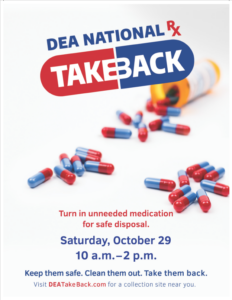
Prescription Take Back Day Oct. 29

Help put a dent in the prescription drug misuse in Texas and around the country by reminding your patients to dispose of unused medications safely and anonymously on Oct. 29, National Prescription Drug Take Back Day.

Since the first event in 2010, more than 15 million pounds of prescription drugs have been collected across the country – more than 1 million in Texas – according to DEA. Collection sites may include physicians’ practices, community health centers, hospitals, police stations, schools, and other private businesses

ALERT – Scam Targeting DEA Registrants & Other Health Professionals

From Texas Medical Board – February 5, 2020

The U.S. Drug Enforcement Administration (DEA) reports that
health professionals have been targeted by criminals posing as DEA agents.

In some instances callers may claim to be employees with the
Texas Medical Board, DEA, FBI or other law enforcement entity and may even
attempt to spoof agency phone numbers or send documents on official-looking
letterhead demanding money. 

Please know the TMB would never call and make such requests for
sensitive information over the phone or send demand letters for money to
reinstate licenses or threaten the arrest of licensees. The TMB does not
suspend licenses at the direction of the DEA, FBI or other federal entity.
Additionally, the TMB has no authority to issue, cancel, or influence arrest
warrants, as some scams have indicated.