Tag: Staffing
Staff Motivators That Beat a Pay Raise
Say “thank you,” loudly and in technicolor.
Public praise is free but priceless. Instead of a vague “good job,” spotlight the exact behavior you want copied: “Ana stayed late to troubleshoot a claim and saved the patient a $300 bill.” Physicians Practice Pearls expert Neil Baum, MD, calls the morning huddle “the best two minutes you can spend with your staff.” A quick shout-out there—or on a break-room whiteboard—tells people you notice the details.
Keep a stack of blank note cards on your desk. Hand-written kudos feel personal and often end up taped to monitors for months.
Invite staff to hack the workflow.
Front-desk teams see caller logjams first; billers spot denial patterns in real time. Bring them into the fix. Start simple: Post a sticky-note board labeled “Kill a Hassle,” review ideas every Friday and act quickly on the easy wins. Seeing suggestions adopted fuels the next wave of improvements.
Swap rigid shifts for micro-flexibility.
Eighty-two percent of clinicians say flexible hours would ease burnout, yet only 29 percent receive them, according to a survey on curbing staff turnover. You can close that gap without blowing up the schedule:
- Let billers log in from home during blizzards.
- Approve a lunch-hour swap so a nurse can make the daycare pickup.
- Offer Friday half-days when patient volume is light.
Generational staffing research shows that many employees will trade modest raises for autonomy nearly every time
Rotate “stretch” assignments.
Cross-training keeps boredom at bay and coverage steady when someone is out sick. This blueprint for cross-training for productivity walks through mapping every role and pairing mentors with learners—no tuition required. Try a 90-day rotation: a receptionist shadows the billing manager on prior auths; a medical assistant learns vaccine fridge logs. You build a talent bench, and staff see a career path instead of a dead end.
Hold five-minute stay interviews.
Exit interviews happen too late. Stay interviews—quick, quarterly check-ins that ask “What still excites you here? What might tempt you to leave?”—surface fixable irritants early. In one case study on hiring during the Great Resignation, a practice saved two senior coders after discovering their chief complaint was a squeaky chair and thermostat wars. Block 10 minutes every Friday for one informal chat. Bring a pen, not a form; the goal is conversation, not paperwork.
Celebrate life outside the practice.
People stay where they feel seen. A birthday cupcake, a shout-out for a child’s graduation or public applause when someone passes a credentialing exam costs pennies. A how-to on recognizing staff milestones reminds managers that re-recruiting existing employees starts with asking about their families, hobbies and pain points—then acting on the answers.
Create a shared calendar labeled “Wins & Milestones” so teammates can add their own moments worth cheering.
Protect two “dark” hours a week.
Constant interruptions tank productivity and morale. Clinicians who tested “quiet blocks” reported faster chart closure and happier teams, according to this roundup on burnout beyond physicians. Pick a mid-afternoon slot twice a week: no phone transfers, no walk-ins, no inbox pings. Nurses use it to stock rooms, assistants catch up on vaccine logs and doctors finish notes—everyone leaves on time.
Turn transparency into a super-power.
When staff understand the financial picture, they’re far less likely to assume the boss is hoarding cash. Share payer-mix trends, new-patient counts or denied-claim rates at monthly meetings. This budget guide argues that candid dashboards spark solutions long before a staffing crisis erupts. If numbers feel intimidating, start with one metric—say, days in A/R—and ask for ideas to nudge it down. The dialogue is the point.
Crowdsource micro-wins every week.
Keep a stack of Post-its at each workstation and invite anyone to jot a nagging inefficiency. Review three notes at the Friday huddle and green-light at least one. Employees who hear “Yes, let’s try it” stay longer than those who hear excuses
Bringing Joy to Your Staff
Medical practices run on people, not just physicians.
Support staff—front‑desk schedulers, billers, MAs, nurses—often shoulder the first wave of patient frustration and the last wave of administrative overload. When joy disappears, turnover follows and patient experience slips.
Here are 10 evidence‑based tactics (offered by “Physician Practice”) to put delight back into the workday and keep your best people.
1. Ask, listen and act on feedback
Move from “suggestion box” to true participative management. Before rolling out any workflow change, solicit frontline ideas in daily huddles, publish the top three suggestions on a whiteboard and close the loop within a week. Employees who see their input reflected in policy score higher on engagement surveys and are more likely to propose innovations that save time and money
2. Recognize great work in real time
Dollar‑free praise beats stale year‑end bonuses. Public shout‑outs at a morning huddle or via an oversized card signed by peers reinforce behaviors that improve patient flow and safety. Tie each kudo to a specific accomplishment so staff connect the dots between effort and outcome
3. Celebrate small wins and birthdays
Micro‑celebrations trump a lone holiday party. The classic “Cinco de Mayo taco bar” or an impromptu cupcake run after a spotless audit tells staff you notice the grind. Those light moments strengthen social bonds that translate into better teamwork when the waiting room is overflowing.
4. Offer genuine scheduling flexibility
Extra PTO, rotating early‑out Fridays or seasonal compressed shifts cost less than recruiting a replacement. Flexible scheduling keeps mid‑career parents in the workforce and can even delay retirements, preserving institutional knowledge while lifting morale.
5. Make the break room a refuge
Healthy snacks, natural light and a phone‑free policy turn 15 minutes of downtime into true recovery. Keeping the refrigerator stocked with fruit and yogurt is a low‑budget perk that employees consistently list among their favorite morale boosters.
6. Invest in professional growth
Stagnation is the enemy of joy. Map a modest CME budget to every role, fund at least one conference or certification per employee each year, and spotlight success stories at staff meetings. Practices that budget for training report higher morale and fewer costly coding errors.
7. Delegate with purpose, not desperation
Match assignments to strengths and clarify roles so no one feels set up to fail. Clear expectations create “psychological safety,” a proven driver of high‑performing medical teams and a buffer against burnout.
8. Lead with transparency and empathy
Trust grows when leadership shares key metrics, explains tough decisions and asks, “How can we help?” Thoughtful, two‑way communication is one of the quickest ways to boost engagement and cut gossip that erodes culture.
9. Give employees a voice in quality‑improvement projects
Invite schedulers, billers and medical assistants to co‑design process fixes—whether a new triage script or a quicker prior‑auth checklist. Staff who help craft solutions adopt them faster and police the workflow themselves, freeing managers to lead rather than chase compliance.
10. Inject fun into routine days
Ugly‑sweater contests, step‑count challenges or “puppy‑visit Fridays” (partner with a local shelter) deliver quick dopamine hits that last long after the prize. Practices that weave lighthearted events into the calendar report lower absenteeism and higher patient‑experience scores.
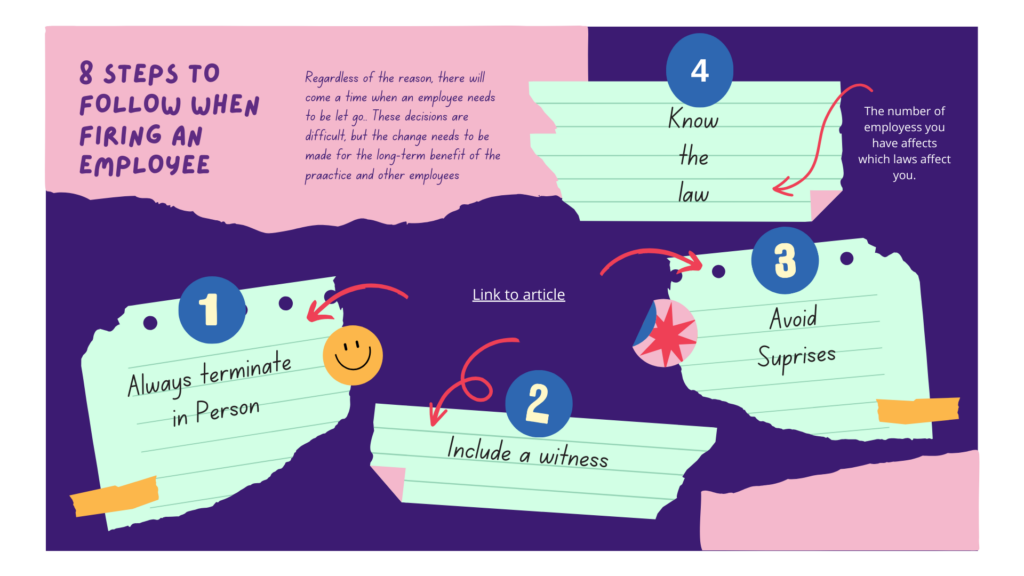
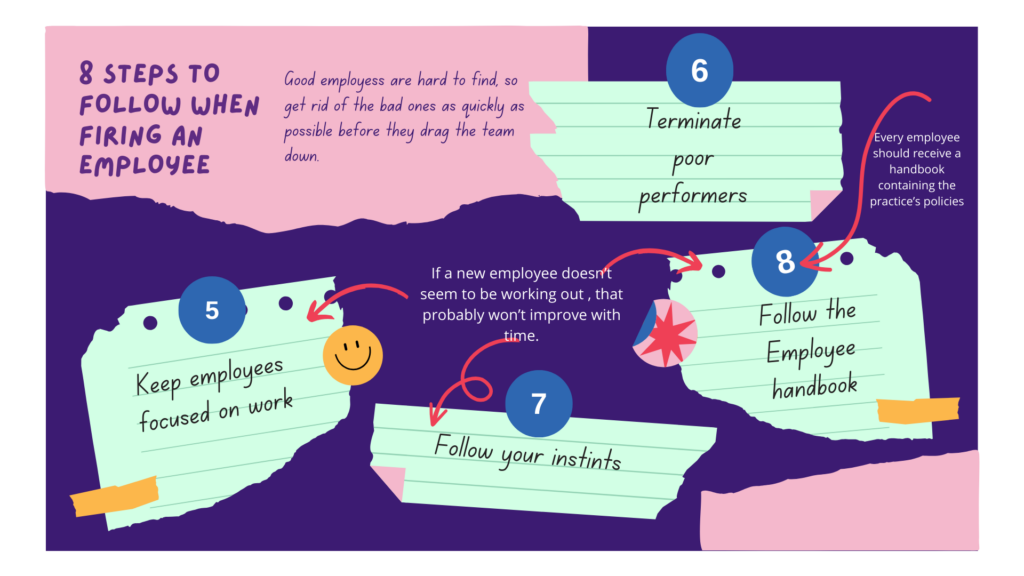
Termination of Employee
No matter how much time we spend vetting potential hires, eventually, someone isn’t going to work out.
Regardless of the reason, there will come a time when an employee needs to be let go. These decisions are difficult, but the change needs to be made for the long-term benefit of the practice and the other employees.
What is the Value of Benefits for Staff
Do you know the actual value of benefits offered to your staff?
Maybe you should.
Maybe your staff should.
If you have been looking for a way to calculate the value of benefits offered for your staff, here is an option found on the MGMA Community.
Just click the download button to view the spreadsheet.
The “how to” instructions are below.
It’s basic, but the employees seem to really like it.
1. Use the + to add a tab for each employee.
2. Rename each tab to your employee’s names.
3. Copy and paste the content from the ‘Employee A’ tab to the rest of your employee tabs.
4. Update the DATA INPUT tab with the amount your clinic pays for each employee on a monthly bases (this info will pull into the employee’s individual tabs).
5. In each employee tab, input the amount you pay monthly for Life Insurance (if you provide that benefit) in column B.
6. In each employee tab, modify as needed, the number of days you give for PTO, Holiday & the Retirement % (you’ll need to update both the description and also the formulas in column C).
7. Add or remove benefits as it applies to your clinic and employee.
I hope you find this to be helpful!
Connie McVein, Chief Executive Officer
Oregon Neurology, Springfield OR
Staff Salary Survey 2020: Staffing Trends
10/22/2020 Drew Boxler, Physicians Practice.
Staff Salary Survey 2020: Staffing Trends 10/22/2020
[embeddoc url=”https://community.poetllc.org/wp-content/uploads/2020/10/Salary-Survay-Physicians-Practice-10222020.pptx” download=”all” viewer=”microsoft”]
Recent Comments